February 2022
Price of local rice in Accra trends downwards
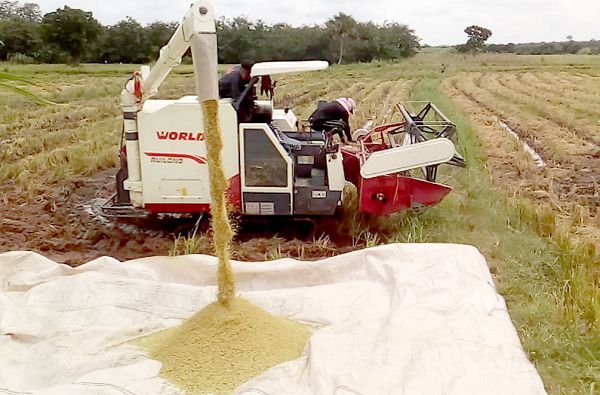
As Local radio station believes its campaign inspired the popularity
For years, policymakers in Ghana have toyed with the idea of imposing a ban on rice importation. They argue that rice importation saps the scarce foreign exchange and makes it difficult for local farmers to compete.
According to OEM, in 2019, Ghana imported US$314M worth of rice, becoming the 22nd largest importer of rice in the world. Despite local rice farmers' cry over the unfair competition created by imported rice, plans to impose a ban remains unpopular among rice importers.
In 2019, news reports of local rice farmers' inability to find a market for their produce led to a campaign being launched by the leading English-speaking based in the capital to encourage consumption of local rice.
Ironically, at the time of the launching, while farmers were unable to find a market for the produce, the commodity remained pricey, especially in Accra – the country's capital – according to market data collected by Humanitarian Data Exchange.
The Humanitarian Data Exchange, sourced from the World Food Programme Price Database, is collected weekly from various markets across Ghana. As of 2016, a bag of 50kg of local rice in Accra was more expensive than in Kumasi, the second biggest city in Ghana – a consistent development with other food prices.
The commodity cost consumers at least 20 percent more in Accra than in Kumasi. At some point, the price rose to above 50 percent more than it costs in Kumasi. This was somewhere in September 2017 – albeit that was just one time. The reason for the spike was not explained, although subsequent market surveys showed prices that were somewhat consistent with previous prices.
While there were no market surveys in November 2019, the month Citi FM launched its campaign, the latest price collected in July 2019 showed local price was still 20 percent more expensive in Accra.
However, the survey resumed in April 2020, and rice cost only 7 percent more in the capital than in the second biggest city. Subsequent surveys continued to point to a narrowing of the disparity in the commodity price between the two cities.
However, the survey resumed in April 2020, and rice cost only 7 percent more in the capital than in the second biggest city. Subsequent surveys continued to point to a narrowing of the disparity in the commodity price between the two cities.
In November 2021, two years after the Citi FM campaign was launched, the staple food price was 45 percent less in Accra. Nominally, the price of rice had reduced from about GHS190 to about GHS176 between 2016 and 2021.
On the other hand, the price in Kumasi had shot up from GHS150 to GHS257 during the same period. The reason for the price decrease in Accra could be down to many other unknown factors, but the campaign's popularity that some government officials bought into makes it a significant event that cannot be overlooked.
Data on local rice consumption is scanty but would no doubt have proved crucial in measuring how demand had changed over the period, especially before and after Citi FM initiated the campaign.